Case Studies » Roche Molecular Systems – UET TECHNOLOGY
Roche Molecular Systems is a diagnostic division of Hoffman-La Roche which manufactures equipment for medical diagnostics. They focus on health care applications for physicians, hospitals, and consumers.
Roche Molecular Systems is a diagnostic division of Hoffman-La Roche which manufactures equipment for medical diagnostics. They focus on health care applications for physicians, hospitals, and consumers.
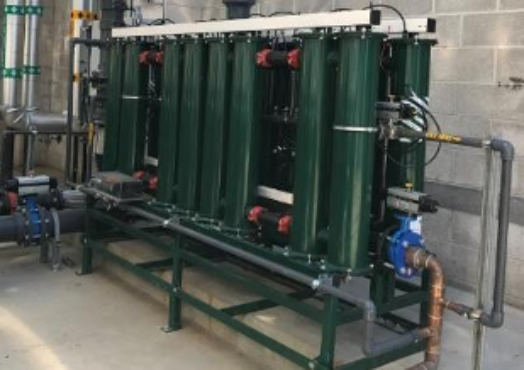
The Pleasanton facility used traditional chemical water treatment. They also used a salt-based water softener prior to UET’s system in an effort to be more sustainable. They dealt with multiple issues regarding corrosion and bio-contamination. To that end, they sought out UET’s technology to further their environmental responsibilities by eliminating chemical treatment, removing softener reject (brine) and running higher cooling tower cycles to reduce blowdown, thereby saving water.
%0
Make-Up
Savings
%0
Blowdown
Savings
%0
Softener Savings
%0
Chemical
Savings
Savings Feb – Dec 2016 vs. 2017
Results
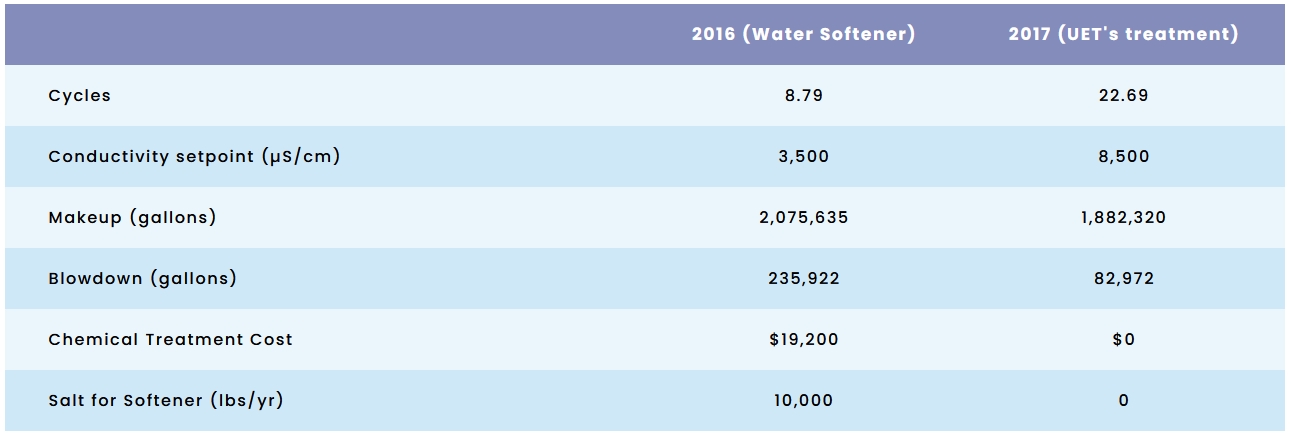
Raw numbers from 2016 (with water softener) vs. 2017 (with UET) are as follows:
Scaling the heat load of 2017’s cycles of concentration to match 2016’s evaporation, the savings are as follows:
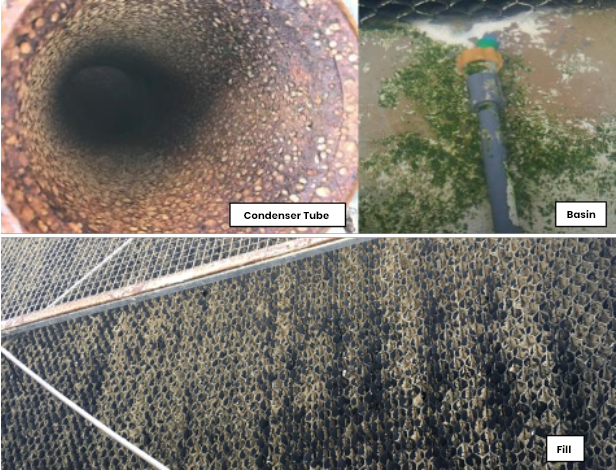
Treatment in 2017 was done without the need for chemical treatment or salt, while also eliminating softener brine reject. Prior to UET’s treatment, Roche’s Pleasanton facility had to deal with scale, corrosion, and bio- contamination issues.
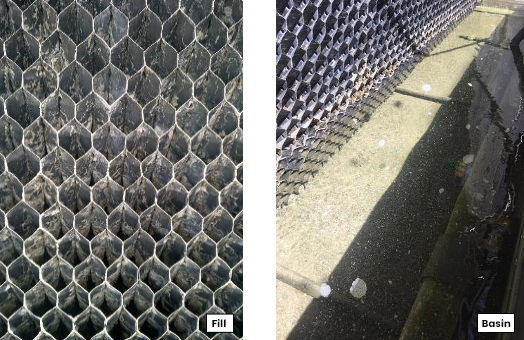
Before UET (November 2016)
Within two months, a visible decrease in bio-contamination and scale on wet surfaces can be seen on the cooling towers.
Approach temperatures of the chiller system remained unchanged despite cycling much higher than water-softener levels, but without using the water softener.
After using UET's technology (April 2017)
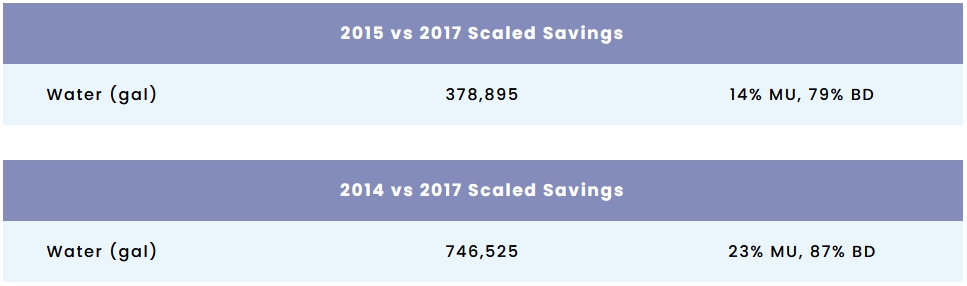
2017 vs. Previous Years:
Below is a table of water usage for 2015 and 2014 from February to July compared to 2017 (pre-water softener)
True to Roche’s mission to sustainability, they have been increasing their water savings year by year. They have been decreasing the amount of water they evaporate despite later years showing higher temperatures.
Scaling the heat load from 2017’s cycles of concentration to the previous year’s yield the following results:
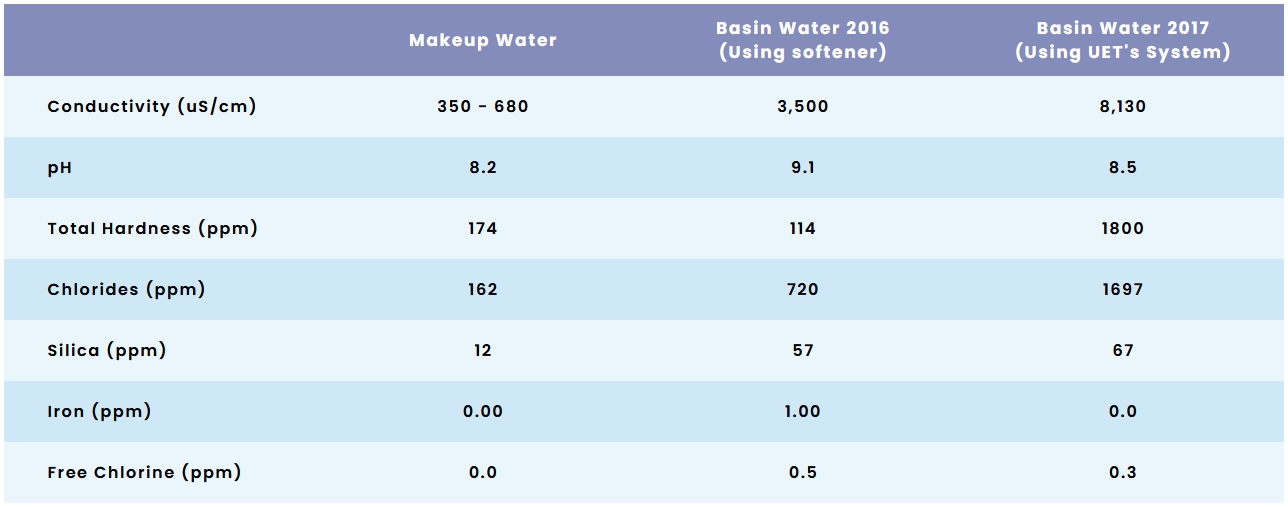
Water Composition (Averages):
Compared to 2016’s water softener, UET’s can cycle up much higher concentrations while more effectively treating bio-contamination and preventing scale without the use of chemicals or salt. There is no brine by-product, and function is not impeded by scale or corrosion.